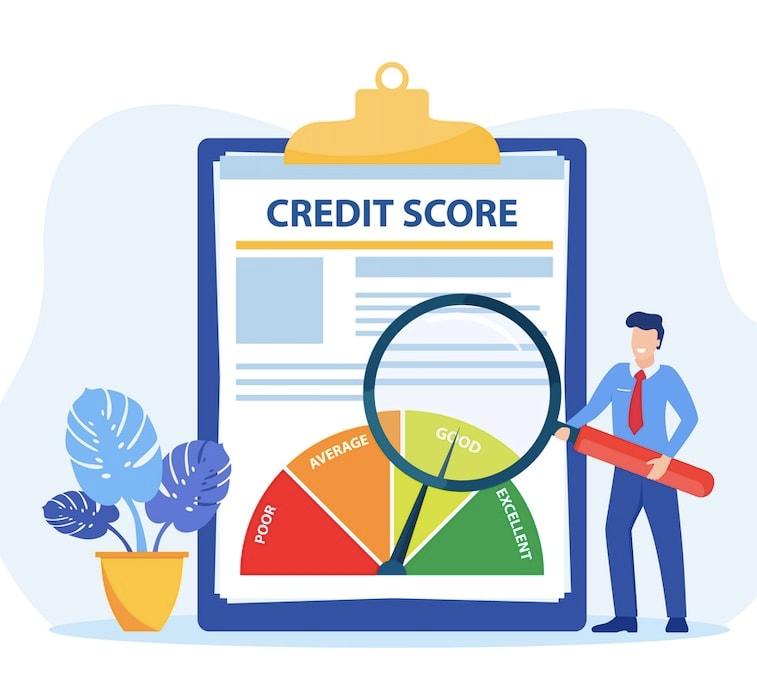
Car loan refinancing can help you save money by securing a lower car loan APR and/or changing your repayment period, but how will it affect your credit score?
Any time someone performs a hard check on your credit, as lenders will for you to get approved for a new car loan, your credit score drops slightly. However, with consistent on-time payments, your credit will quickly recover or even improve.
Read this guide to learn:
The basics of credit scores
What credit score you need to refinance
How refinancing specifically affects your credit score
How some people improve their scores after a refinance
When not to refinance
The timeline for credit score recovery after a refinance
Steps to raise your credit score
The most important thing to do to limit how much your credit score is lowered by refinancing
What is a credit score?
What is a FICO score?
How are credit scores calculated?
Where does the information on your credit report come from?
Credit scores are three digit numbers that are designed to tell lenders how likely you are to repay your debts. They indicate how financially stable you are.
FICO credit scores are the most popularly cited scores, but FICO is merely a type of credit score model (FICO stands for Fair Isaac Corporation, the company that helped pioneer credit scoring). Most agencies use either a FICO model or a variation of it for credit score calculations.
Credit scores take a look at five major categories in your finances:
Payment history
Amounts owed
Length of credit history
Credit mix
New credit
Each category is weighed differently, but each part is important to ensuring that your score is as healthy as possible. Credit scores are calculated by looking at monthly reports that are sent to the three major credit bureaus (Equifax, Experian and TransUnion).
Your payment history is the most important factor in your credit score, accounting for 35% of your total score. Do you pay your accounts on time and in full, or do you miss payments?
If you have had a missed or late payment, its effect on your score will depend on:
The amount you’ve missed
How recently you’ve missed a payment
How frequently you’ve missed payments
Ensuring that you make consistent, full, and on time payments will have the greatest positive effect on your credit score.
This is the second most important category for your credit score, accounting for 30% of your credit score. The amounts owed category looks at how much money you owe, how much money you have available to you, and the number and types of accounts you have.
The most important factor in this is your credit utilization ratio, which is a ratio of how much money you owe compared to how much money you have available to you. This looks at individual accounts as well as your total debt and total line of credit. Your ratio should be less than 30% for each account as well as your overall amounts owed.
The length of your credit history makes up 15% of your credit score. This category looks at how long your accounts have been open and active.
How long have you had your accounts open and how long has it been since you’ve used certain accounts? The longer you have a history of having open accounts, consistently using them, and consistently paying them, the higher your score will be.
Your credit mix accounts for 10% of your credit score. Your credit mix looks at how diverse your credit accounts are.
Lenders like to see that you can manage payments for a number of different accounts. Healthy mixes typically include installment loans, mortgages, car loans, credit cards and retail credit cards. The better the mix, the better your score will be.
Your new credit counts for 10% of your credit score. This category looks at how many new accounts you have.
If you have new accounts that you haven’t proven that you can consistently pay, it will count against you. New accounts are like unanswered questions to credit bureaus.
Many different organizations send reports to the bureaus, including:
Mortgage lenders
Auto loan lenders
Credit card companies
Personal loan lenders
Medical billing collection agencies
Utility companies typically do not send reports, but missing utility payments can result in reports to a collections agency (which will be reported). The credit bureaus take all of these reports and break the information down into the following categories.
Credit scores are broken down into five categories:
Exceptional (Super Prime): 800-850
Very good (Prime): 740-799
Good (Near Prime): 670-739
Fair (Subprime): 580-669
Very poor (Deep Subprime): 300-579
The better your credit score is, the better car loan APR you will be offered. The best car loan refinance rates are offered to those with very good and exceptional credit scores. But that doesn’t mean that you will be unable to refinance if your score isn’t quite that high.
If your credit score is better than it was when you originally financed and/or the market rates are better than when you initially financed, there’s a good chance you will be able to qualify for a better car loan APR.
When you refinance a car, it affects two categories in your credit score: your length of credit history and your new credit.
Because it will be a new loan, it will shorten your length of credit history, which can cause a minor dip in your score. It will also be a new credit on your account, so your score will lower because it's new.
Refinancing your car means that you will also have hard inquiries on your account. Hard credit inquiries will also cause a dip in your score, typically between five and ten points. It is temporary however, and they usually wear off in about six months.
While refinancing will affect parts of your score, it can also help your finances, and by extension credit score, by saving you money and making your payments more manageable.
If you are able to refinance your car loan to a lower car loan APR, you can save a lot of money over the course of your loan. And those savings can be used to pay down other debts you have. These payments can lower your credit utilization ratio, which can significantly improve your credit score.
If you are having trouble keeping up on your monthly payments, refinancing can help you by lengthening your repayment plan. When you lengthen your repayment plan you have more time to pay off your loan, which significantly lowers your payments. If you can stay more consistent on your payments, you will increase your score a good deal.
For most people, refinancing can help them save money on their monthly car payments. However, because refinancing does temporarily negatively affect your credit score, you should avoid refinancing:
Right before making a major purchase that requires a credit pull
Right after making a major purchase that requires a credit pull
For example, if you’ve just bought a home, you may want to wait for your credit to recover. And if you are hoping to buy a home in the next six months, you may want to prioritize having your credit score in tip top shape for that.
For most people, any score reduction from refinancing should wear off within a few months to a year as long as you make on-time payments. The hard credit inquiry stays on your report for two years, but is most impactful when it is recent.
Whether you’re building credit for the first time, want to get your credit score in tip-top shape before refinancing, or plan to use these steps to raise your score up after refinancing, here are some actions you can take to give your credit score a lift:
Make consistent, on-time payments
Request higher credit limits
Avoid opening new lines of credit
Ask to be an authorized user on an existing account
Review your credit report
If you have a habit of making late payments, try to fix this as soon as possible. Sign up for autopay on your bills if possible to ensure you don’t miss a bill and look for ways to keep up on full payments. Are there areas of your budget where you can make sacrifices to save a bit of money? Canceling unused or unnecessary subscriptions and switching to generic brands are just a few ways you can free up some extra money and ensure you are making full payments on all of your accounts.
Contact your credit card companies and ask for higher credit limits. This will automatically give a boost to your credit score by reducing your credit utilization ratio.
Any new accounts that you open at this time will adversely affect your credit score, so try to resist opening anything new until after you refinance your car loan.
If you have a friend or family member with a great credit score, becoming an authorized user on one of their accounts can give your credit score a boost. Their on time payments and low credit utilization ratio can help to give yours a boost.
It’s a good idea to request a copy of your credit report at least once per year to ensure that there aren’t any mistakes or errors. A missed payment marked in error can have a significant effect on your score, so it’s good to regularly review your report and make sure everything is accurate.
When you decide to refinance your car, be sure to apply to all lenders in the same two week time frame. Credit bureaus know that people need to apply to different places in order to compare, so they give a two week window where all hard inquiries will count as one inquiry (and therefore only affect your credit score once.
When you decide to refinance your vehicle, you’ll want to shop around for offers from several different lenders to ensure you get the best deal available to you for your unique financial circumstances. However, if you choose to do this, you must be sure all the credit checks fall within the comparison shopping window allowed by the credit bureaus, which is typically 14 days, up to 45 days. When you do this – as long as the inquiries are all for the same type of loan – it’s counted as one inquiry instead of several on your credit report.
At Auto Approve, we gather offers from many top lenders at once, which means you can be sure all credit checks are done in a short window, with no need for you to find and manually request checks across several companies.
Refinancing your car loan is easy when you use a company that specializes in car loan refinance, like Auto Approve. Our representatives will connect you with offers from top lenders, guide you through your options, then do the paperwork for you.
Get a no-commitment quote from Auto Approve today to see how much money you could be saving!